
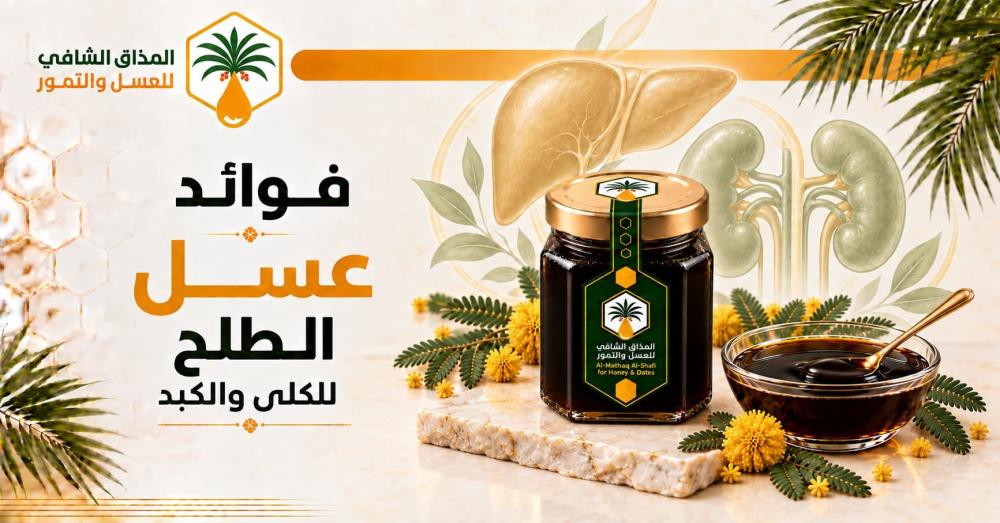

Many people search for the benefits of Talh Honey for the kidneys and liver, as it is one of the most well-known types of natural honey, rich in antioxidants, natural sugars, and minerals. Its use in traditional medicine has been associated with supporting body functions and helping combat oxidative stress. However, its benefits depend on consuming it in moderation and choosing pure honey from a trusted source.
So, what benefits might Talh Honey offer for the liver and kidneys? Can it be consumed daily? And what is the appropriate way and amount to consume it? In this article, we explore its potential benefits, how to choose and consume the right type, as well as the most important precautions to consider, especially for people with liver and kidney conditions.
Benefits of Talh Honey for the Liver
Talh Honey is characterized by a composition rich in antioxidants, natural sugars, and minerals. These elements are associated with supporting liver cells and reducing oxidative stress that can weaken the liver over the long term. Some of its most notable benefits for the liver include:
- Helping stimulate metabolic processes in the liver, particularly the metabolism of fats and sugars, which supports the overall functional performance of the liver.
- Contributing to reducing fat accumulation in the liver during the early stages of fatty liver disease when it is part of a healthy diet and regular physical activity.
- Supporting recovery after liver inflammation by providing easily absorbed energy and antioxidants that help repair cells and reduce cellular damage.
- Providing relative protection for the liver against the toxic effects of certain medications and chemicals by reducing oxidative stress and free radicals.
Benefits of Talh Honey for the Kidneys
Talh Honey may contribute to supporting kidney and urinary system health due to its antioxidant and antibacterial properties. Some of its most notable benefits include:
- Gently promoting urination, which helps the body eliminate excess fluids and some accumulated salts.
- Contributing to cleansing the urinary tract of deposits, thereby reducing the likelihood of kidney stone formation when adequate water intake and a balanced diet are maintained.
- Providing an easily digestible source of energy that does not produce large amounts of toxic metabolic byproducts, which reduces the burden on the kidneys compared with some foods rich in fructose and complex sugars.
- Supporting immunity and helping combat some bacterial infections in the urinary system due to its antibacterial and antioxidant properties.
Is Talh Honey Really Beneficial for the Kidneys and Liver?
Most nutritional and alternative medicine sources agree that Talh Honey can be a supportive component for liver and kidney health, particularly during the early functional stages or for healthy individuals who wish to enhance the elimination of certain toxins and improve metabolism.
On the other hand, medical sources confirm that there is insufficient evidence to consider it an independent treatment for liver diseases or kidney failure, and that its role remains complementary within an overall treatment plan, healthy diet, and lifestyle, particularly in chronic and advanced cases.
How to Choose the Right Talh Honey
The characteristics of Talh honey vary depending on the environment in which Talh trees grow and the season in which nectar is collected. Therefore, its color, density, and flavor may vary from one region to another. Saudi Talh Honey extracted from Talh blossoms in the Hail region is one option characterized by a dark brown color tending toward black, a thick and consistent texture, and a flavor that combines moderate sweetness with a slight bitterness. Understanding these characteristics can help you choose honey according to your preferred taste and intended use, whether consuming it directly or adding it to foods and beverages.
How to Consume Talh Honey as Part of Your Diet
Talh honey can easily be incorporated into a daily dietary routine, provided that the amount is considered and excessive consumption is avoided. Dietary recommendations indicate that a safe amount for a healthy adult generally ranges from one to two tablespoons per day, calculated as part of the total daily sugar and calorie intake.
- Taking a spoonful of Talh honey on an empty stomach, dissolved in a cup of lukewarm water, is one of the most common ways to support digestion, the liver, and the kidneys and to energize the body in the morning.
- Using it as a natural sweetener instead of sugar in tea, herbal drinks, or warm milk, while avoiding very hot water so that the enzymes and antioxidants are not affected.
- Mixing it with yogurt or certain herbs such as chamomile or mint to support digestive health and beneficial bacteria, which may indirectly benefit the liver and kidneys.
- Consuming it before bedtime in moderate amounts may help regulate nighttime metabolism and improve rest and sleep, while people with diabetes or those following strict diets should exercise caution.
How to Preserve the Quality of Talh Honey
Proper storage helps preserve the texture, flavor, and quality of Talh honey for as long as possible. Therefore, it is recommended to seal the container tightly after each use and store it in a dry place with moderate temperatures, away from direct sunlight and sources of moisture.
It is also preferable to use a clean, dry spoon when consuming honey to prevent water or food residue from entering the container. The texture of honey may change or crystallize when temperatures drop, which is a natural change and does not necessarily mean that the product has spoiled or lost its quality.
Precautions When Consuming Talh Honey for Kidney and Liver Health
Despite its benefits, Talh honey, like other types of honey, remains a sugary food that requires clear guidelines for consumption, especially for certain sensitive groups.
- All types of honey, including Talh honey, are strictly prohibited for children under one year of age due to the risk of botulism caused by spores of the bacterium Clostridium botulinum.
- People with diabetes should exercise extreme caution when consuming Talh honey, as it can raise blood sugar when consumed in large amounts and may worsen kidney- and liver-related complications in these individuals.
- People with advanced kidney disease or those undergoing dialysis should consult a doctor before incorporating Talh honey into their diet, as carbohydrate and mineral intake must be strictly controlled, and adulterated or contaminated honey may increase the burden on the kidneys.
- People with fatty liver disease or advanced fibrosis should consume honey, including Talh honey, with great caution and in small amounts. Some studies suggest that frequent weekly honey consumption may be associated with worsening fatty liver disease in some patients if intake is not properly controlled.
- People who are allergic to pollen or bee products may experience allergic reactions when consuming honey, such as skin rashes, itching, shortness of breath, or wheezing. Therefore, it should be avoided or consumed in small amounts initially, with immediate discontinuation if any symptoms appear.
- Excessive consumption of Talh honey on an empty stomach or beyond the recommended amounts may cause digestive problems such as gas and bloating and increase calorie intake, potentially leading to obesity, which is one of the factors that can harm the liver and kidneys over the long term.
Frequently Asked Questions About the Benefits of Talh Honey for the Kidneys and Liver
Does Talh Honey Help Cleanse the Liver?
Natural honey is considered one of the ingredients that supports metabolic processes in the liver and contributes to stimulating glucose production and fat burning. This may indirectly help reduce the metabolic burden and improve the liver's ability to perform its function of eliminating certain toxins.
As for Talh honey specifically, its richness in antioxidants and phenolic compounds makes it a potential candidate for helping reduce oxidative stress that causes liver cell damage, thereby supporting liver health as part of a healthy diet. However, it does not replace medical follow-up or treat liver diseases on its own.
Is Talh Honey Suitable for People with Kidney Disease?
For people with mild to moderate kidney disease, measured amounts of Talh honey may be incorporated into the diet after consulting a doctor, as natural honey is generally considered safe when its consumption is accounted for within the permitted total amounts of sugars and minerals.
In contrast, people with kidney failure or advanced kidney impairment need greater caution. Medical sources recommend not relying on honey as a treatment and emphasize strict monitoring of carbohydrate and mineral intake as well as the source of the honey to avoid adulterated or contaminated products that could contribute to worsening kidney function.
Can Talh Honey for the Kidneys and Liver Be Consumed Daily?
A healthy adult can consume Talh honey daily in moderate amounts, such as one to two tablespoons per day, within the recommended calorie intake, to benefit from its antioxidant properties and its supportive role for liver, kidney, and overall digestive function.
Nevertheless, specialized references recommend considering individual health conditions. People with diabetes, chronic kidney or liver disease, and pregnant women should consult their doctor before adopting regular daily consumption of Talh honey, while monitoring their test results and adhering to safe amounts to avoid potential side effects associated with sugars, allergic reactions, or excessive metabolic burden.
Conclusion
Talh honey can be incorporated into a balanced diet to benefit from its natural sugars and antioxidants, while adhering to moderate amounts and taking individual health conditions into consideration. Choosing honey from a trusted source and free from additives is especially important to obtain a product that retains the natural properties and distinctive flavor of Talh honey.
Talh honey remains a supportive food rather than a substitute for medical treatment, especially in cases of liver or kidney disease or diabetes. Therefore, medical advice should be followed, and honey should not be relied upon alone to treat any medical condition.