
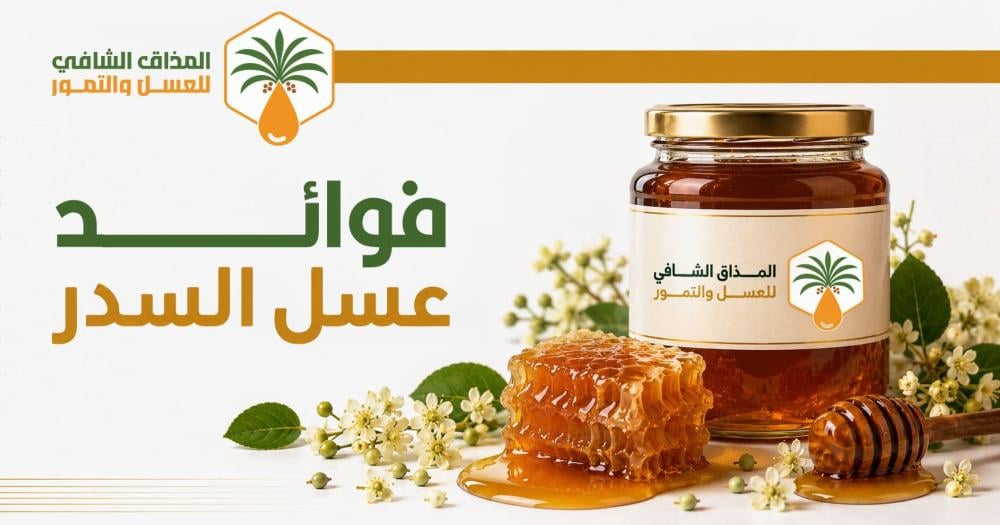

Sidr honey is honey produced by bees from the nectar of Sidr tree flowers. It is known for its distinctive taste, aroma, and texture, as well as its widespread reputation in many Arab regions. Its characteristics and natural composition vary according to the nectar source, region, harvest season, and how the honey is handled and stored. In this article, we explore the main nutritional and health benefits of Sidr honey, along with the most important precautions to consider when consuming it.
What Is Sidr Honey?
Sidr honey is natural honey produced by bees from the nectar of Sidr tree flowers, a tree known in many areas of Arab countries. This nectar is collected during the Sidr flowering season, after which bees transform it into honey through natural processes that include collecting, concentrating, and storing the nectar inside the honeycombs.
The characteristics of Sidr honey vary from one product to another depending on the geographical region, harvest season, nectar source, climatic conditions, and storage method. Therefore, the honey may appear in different shades of color, and its taste, aroma, density, or texture may also vary.
It is important not to rely on color, taste, aroma, or texture alone to determine the authenticity of Sidr honey, as these characteristics naturally change according to the honey's source and the conditions under which it is produced and stored.
Why Is Sidr Honey Famous?
It enjoys Sidr honey high demand, especially when its source is documented and its production is of high quality. This popularity is attributed to a range of distinctive factors that combine nutritional quality with therapeutic and historical value:
- Sidr honey is produced when bees rely on the nectar of Sidr tree flowers during their flowering season, which is why the honey's name is associated with its botanical source.
- It has a distinct honey flavor and an aroma associated with the nectar source, although these characteristics vary according to the region, season, and production and storage conditions.
- Sidr and the honey extracted from it have been associated with food heritage in several Arab regions, which has helped strengthen their presence and reputation among consumers.
- Demand for it increases because of its reputation and botanical source, as well as demand for types of honey with a specific geographical or botanical identity, which is reflected in the price of some high-quality varieties.
- A higher price, popularity, or association with heritage is not, by itself, evidence that Sidr honey is therapeutically more effective than other types of honey.
- Various therapeutic benefits are attributed to Sidr honey, but it is important to distinguish between what scientific studies indicate about honey in general and claims specifically concerning Sidr honey that lack sufficient evidence to establish therapeutic superiority.
Benefits of Sidr Honey
is considered Sidr honey a natural food that contains sugars, plant compounds, and antioxidants. Therefore, it is associated with some nutritional and health benefits when consumed in moderation. In the following sections, we review the main benefits of Sidr honey.
1. Contains Antioxidants
Sidr honey contains a range of plant compounds and phenols that have antioxidant activity. These compounds help counter oxidative molecules in the body, and their concentration varies from one honey to another according to the nectar source, geographical region, production season, and processing and storage methods.
However, the presence of antioxidants in Sidr honey does not mean that it prevents cancer, prevents aging, or treats diseases. These are therapeutic conclusions that cannot be established simply by measuring antioxidant activity in honey. Therefore, this property should be viewed as part of its potential nutritional value, not as a substitute for medical treatment.
2. Provides a Natural Source of Energy
Sidr honey contains natural sugars, such as glucose and fructose, so it can provide the body with a quick source of energy when consumed. It can be suitable as part of a balanced meal or before physical activity that requires energy, depending on a person's nutritional needs.
Nevertheless, Sidr honey remains a source of sugar and calories. Being a natural product does not mean it is calorie-free or can be consumed in unlimited amounts. Consuming honey is also not a guaranteed solution for chronic fatigue. If fatigue persists or is severe, it is better to investigate its cause and consult a doctor when needed.
3. Helps Soothe Cough and Throat Irritation
Honey in general helps soothe the throat and relieve coughing in some people. This is associated with its texture, which temporarily coats the throat and reduces the sensation of irritation. Therefore, it can be used as part of measures to relieve the symptoms of mild colds, but it does not treat the infection or the underlying cause of the cough.
As for Sidr honey specifically, there is insufficient evidence to prove that it is necessarily superior to all other types of honey in relieving cough or throat irritation. Honey should also not be given to children under one year of age because of the risk of botulism.
4. Has Antimicrobial Properties
Some laboratory studies have shown that honey has activity against certain types of bacteria and microbes. This is associated with several factors, including sugar concentration, acidity, and the presence of natural compounds produced by bees or derived from the nectar source. These properties vary from one type of honey to another according to its source and composition.
However, it is important to distinguish between laboratory findings and therapeutic effects inside the human body. Some medical honey products intended for topical use are also subject to different standards and processing and are used in specific medical contexts under the supervision of specialists.
Sidr honey intended as food should not be considered a disinfectant or treatment for infections and internal inflammation, and there is insufficient evidence to claim that consuming it eliminates infections.
5. Contains Various Plant Compounds
Sidr honey contains a range of plant compounds that pass into it from the nectar source, depending on the types of plants, region, and flowering season. Therefore, the characteristics and composition of honey vary from one product to another even when the commercial name is similar.
However, these compounds should not be considered a reason to rely on Sidr honey as a primary source of plant nutrients in the diet. It does not replace fruits, vegetables, whole grains, and other diverse foods that provide fiber, vitamins, minerals, and a broader range of nutrients. Therefore, its nutritional value is best maintained when it is included in moderation as part of a balanced diet.
6. Adds Nutritional and Sensory Value to the Diet
Sidr honey has sensory characteristics that make it preferred by many consumers. Its flavor, aroma, color, and texture can vary according to the nectar source, region, harvest season, and storage methods. Some people use it to sweeten drinks or foods and add a distinctive flavor, in addition to its content of sugars and some plant compounds.
Its heritage status also gives it additional value in some communities, contributing to increased interest and demand for some varieties. However, this sensory or heritage value does not mean that it has a proven therapeutic effect, and it should not be used alone to judge the quality or authenticity of honey.
7. Used in Some Topical Applications of Medical Honey
There are medical honey products intended for topical use and used in some healthcare contexts, such as caring for certain types of wounds, after being prepared according to medical standards that ensure their suitability for use. This differs from Sidr honey or any food-grade honey sold for daily consumption, even if it is of high quality.
Therefore, it is not recommended to apply household food honey to wounds or burns because it is not a sterile product intended for this purpose. Improper use can lead to complications or delay necessary care. Medical honey itself is also not a substitute for medical assessment and treatment in cases of deep wounds, severe burns, or signs of infection.
Nutritional Value of Sidr Honey
The nutritional value of Sidr honey mainly comes from its content of sugars and water, along with varying amounts of plant compounds and some other components depending on the nectar source and nature of the honey.
Its nutritional composition varies from one product to another, so fixed figures should not be generalized to all types of Sidr honey without referring to a reliable nutritional analysis. Below, we explain the main components and nutritional value of Sidr honey.
Sugars and Calories in Sidr Honey
Sidr honey, like other types of honey, contains a high proportion of sugars and therefore contains calories. Being a natural product does not mean that it is sugar-free or can be consumed in unlimited quantities.
Plant Compounds and Antioxidants
Sidr honey contains compounds with antioxidant activity, but the composition and concentration of these compounds are not consistent across all types of Sidr honey. They are mainly affected by the nectar source, the region where the honey was collected, the production season, as well as processing and storage methods.
Therefore, all types of Sidr honey cannot be considered identical in terms of their plant compound content or antioxidant activity. The presence of these compounds also does not mean that honey treats or definitively prevents a disease.
Ways to Add Sidr Honey to the Diet
Sidr honey can be incorporated into the diet in simple ways, while keeping in mind that it is a source of sugars and calories and is not a substitute for nutrient-rich foods. Suitable methods include:
- Add it to yogurt or oatmeal for a naturally sweet taste.
- Use a small amount to sweeten warm drinks instead of sugar.
- Eat it with bread or whole grains as part of a balanced meal.
- Add it to some fruits or nuts for a snack.
- Use it to prepare some sauces, dressings, and homemade desserts instead of other sweeteners, while controlling the amount.
- Consume it directly in moderation if it suits the person's diet.
What Makes Sidr Honey Different from Other Types of Honey?
Sidr honey differs from other types mainly in its nectar source, sensory characteristics, and identity associated with the region and season. Therefore, some consumers prefer it because of its taste, source, or heritage value, but these differences do not necessarily mean that it is healthier than all other types of honey.
- Nectar source: Sidr honey is associated with the nectar of Sidr tree flowers, while other types of honey rely on the nectar of different plants and flowers, which affects the characteristics of each type.
- Taste and aroma: Sidr honey has a distinctive flavor and aroma, but their intensity varies according to the honey's source, harvest season, and region.
- Color and texture: Its color and texture vary from one product to another. These characteristics are also affected by the nectar source, degree of maturity, and storage, and color or texture alone cannot be relied upon to prove authenticity.
- Season: Its production is linked to the flowering seasons of the Sidr tree, so available quantities and honey characteristics vary according to harvest timing and environmental conditions in the production area.
- Price: Some types of Sidr honey are priced higher than others because of limited production, their source, demand, and the geographical or commercial identity of the product. However, a higher price does not automatically prove higher quality or greater health benefits.
- Local and heritage identity: Sidr honey holds a special place in some Arab regions, and some varieties are associated with a local reputation and traditional honey-production practices, which increases their commercial value for some consumers.
- From a health perspective: It is not correct to say that Sidr honey is absolutely healthier than all types of honey. Honey in general may contain plant compounds and antioxidants, and their amounts vary according to the source and processing, but sensory characteristics or commercial popularity are not sufficient to prove therapeutic superiority.
Precautions for Using Sidr Honey
Although Sidr honey is a natural food that can be consumed as part of a balanced diet, it is not suitable for everyone in the same way, and excessive consumption may not be appropriate for some groups.
Therefore, it is important to know the situations that require caution before including it in the diet, especially for young children, people monitoring their sugar intake, and those who are allergic to honey components.
Sugar and Calorie Content
It is preferable to consume it in moderation, especially for those trying to manage their weight or reduce sugar intake. For people with diabetes, being natural does not mean honey is suitable without accounting for the amount consumed. It should be included within the total carbohydrates and sugars in the diet, with consultation with a doctor or nutritionist when needed to determine the appropriate amount.
Do Not Give Honey to Children Under One Year of Age
Sidr honey or any other type of honey must not be given to children under one year of age because it may contain bacterial spores that can cause infants to develop infant botulism which is a serious condition requiring medical care. This warning applies to raw and pasteurized honey and all types of honey without exception.
Honey Allergy
Some people are allergic to honey or one of its components. Symptoms may include itching, skin rash, swelling, or digestive problems, and in rare cases symptoms may be severe. Therefore, if any clear signs of an allergic reaction appear after consuming Sidr honey, it is preferable to stop consuming it and consult a doctor to evaluate the condition and determine the cause.
If severe symptoms such as difficulty breathing or swelling of the face and tongue occur, urgent medical care should be sought without waiting to see whether the symptoms improve on their own.
Do Not Use Honey Instead of Medical Treatment
Sidr honey is a food, not a medicine. Therefore, it should not be used instead of prescribed medications, a doctor's diagnosis, or treatment intended for chronic diseases. Including it in the diet may be suitable for some people, but its potential nutritional benefits do not mean that it treats diseases or replaces medical care.
When a chronic health condition or persistent symptoms are present, the treatment plan determined by the doctor should be followed, and no medication should be stopped or replaced with honey without consulting a specialist.
Beware of Products with Therapeutic Claims
Caution should be exercised with Sidr honey products marketed with exaggerated therapeutic claims, such as the ability to treat several diseases or improve certain bodily functions without providing clear evidence to support these claims. The presence of the word «Sidr» on the package does not automatically mean that the product has exceptional therapeutic properties.
When buying Sidr honey, it is preferable to choose a place that clearly provides the ingredients, honey source, and product information, just as Mathaq Shafi Store and to avoid stores that conceal the honey's ingredients or rely on general therapeutic promises without verifiable, reliable information.
How to Choose Authentic Sidr Honey
Choosing Sidr honey does not depend only on color, taste, or texture, as these characteristics naturally vary from one product to another. It is better to check the package information, product source, and the entity that packages or produces it before purchasing, paying attention to the following details:
- Make sure the product name is clearly stated and whether it is classified as Sidr honey or single-source honey, according to the information on the package.
- Read the ingredients and make sure they are clearly stated. Avoid products that do not disclose their ingredients or contain undeclared additives.
- Look for the country or region of production and the honey source whenever this information is available, especially if the product is marketed as Sidr honey from a specific region.
- Having the name of the entity responsible for production or packaging helps trace the product and identify its source.
- Check the expiration date and any other identifying information printed on the package before purchasing.
- Make sure to buy honey from a source that stores it under appropriate conditions, and follow the storage instructions on the package after opening it.
- Having a clear address or means of contact for the producer or packager gives consumers the ability to inquire and verify product information when needed.
- Tests such as putting honey in water, using a matchstick, or judging its texture are not conclusive methods for proving honey authenticity. The result may be affected by the natural properties of honey and cannot alone reveal adulteration or additives.
- The clearer the product information and the more identifiable and traceable the producer or packager is, the more reliable the honey selection will be. Scientific confirmation of composition or authenticity, when necessary, requires an appropriate laboratory test rather than a simple home test.
Frequently Asked Questions About the Benefits of Sidr Honey
Is Sidr Honey Suitable for Everyone?
No. Although it is a natural food, it is not suitable for some groups, such as children under one year of age and people who are allergic to honey. People with diabetes should also take its quantity into account within their diet.
Does Crystallization of Sidr Honey Mean It Has Spoiled?
No. Honey crystallization does not necessarily mean that it has spoiled. It may occur naturally because of the sugar composition, temperature, and storage conditions. It is preferable to inspect the honey and make sure its aroma and appearance are normal and that it has been stored properly before consuming it.
Conclusion
Sidr honey is a natural food distinguished by its botanical source associated with Sidr tree flowers, as well as its taste, aroma, and characteristics, which vary according to the region, season, and nectar source. Nevertheless, Sidr honey should not be presented as a guaranteed treatment for diseases or as a substitute for medications and medical care. It is best consumed in appropriate amounts, with a product of clear source and information selected, while paying attention to precautions, especially not giving it to children under one year of age and considering the amount of sugar for those who need to control their sugar intake.