
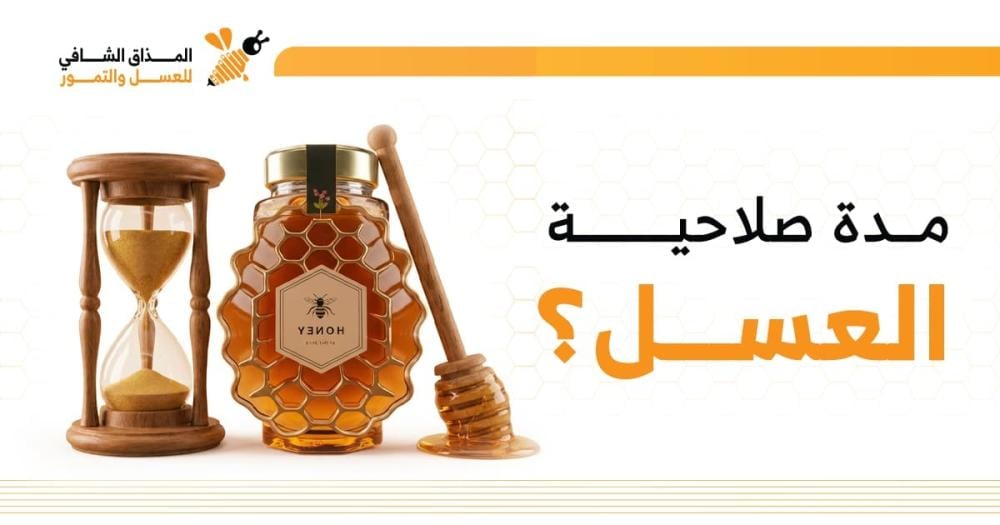

How many years does honey last? This is one of the questions related to honey’s ability to maintain its properties and quality for long periods when stored properly. Natural honey has a unique composition that helps it remain suitable for consumption for an extended time compared to many other food products. However, storage methods, temperature, and the type of container can affect its condition over time. Some characteristics, such as texture or color, may change without necessarily meaning that the honey has become spoiled.
How Many Years Does Natural Honey Last?
Pure natural honey can remain suitable for consumption for many years, and this period may extend to 10 years or more when stored correctly. A tightly sealed container and a dry, moderate-temperature place away from heat and light help preserve its quality. Some of its properties may change over time, such as color, texture, or some enzymes, without meaning that its shelf life has ended. As for honey blends, their shelf life varies depending on the added ingredients and the nature of the product.
Why Can Honey Stay Fresh for Many Years?
This is due to natural properties in its composition that make its environment unsuitable for the growth of many microorganisms, especially because of its low water content and high sugar concentration. Honey’s acidity also helps limit the activity of some microbes, while its natural components contribute to maintaining its stability for extended periods. Therefore, pure honey can preserve its quality for years when stored away from moisture, heat, and contaminants.
How Many Years Does Honey Last and Does Honey Have an Expiry Date?
When asking how many years honey lasts and whether honey has an expiry date, the answer is that pure natural honey can remain suitable for a very long period, and it does not have an actual expiration date when stored properly. Maintaining its quality depends on keeping it away from moisture, heat, and light while ensuring the container is tightly closed after use.
Regarding the question of whether honey has an expiry date, a date may be placed on the package for regulatory purposes, but this does not necessarily mean that natural honey becomes spoiled afterward. Some honey characteristics may change over time, such as color, texture, or flavor, without these changes alone being proof that it has gone bad.
What Is the Difference Between Honey Shelf Life, Safety, and Nutritional Quality?
Honey shelf life, safety, and nutritional quality may seem like similar concepts, but they refer to different aspects when evaluating the product. Shelf life is related to how long honey remains suitable for use, and the differences can be explained as follows:
- Honey Shelf Life:
- Meaning: The ability of honey to remain suitable for consumption for a long period when stored properly.
- Factors affecting it: Moisture, temperature, and storage methods.
- Honey Safety:
- Meaning: Ensuring that the product is free from contamination or factors that may make it unsafe for consumption.
- Factors affecting it: Cleanliness, contamination, and handling methods.
- Nutritional Quality:
- Meaning: The extent to which honey maintains its natural properties, components, and distinctive characteristics.
- Factors affecting it: High temperatures, long-term storage, and preservation conditions.
Does the Shelf Life of Raw Honey, Processed Honey, and Honey Blends Differ?
The period during which honey maintains its quality varies depending on its type, processing method, blend ingredients, and storage conditions. Pure honey has a high ability to remain preserved, but its quality may change over time, especially when exposed to moisture or heat. This can be explained as follows:
- Raw honey maintains its properties for a long period when stored in a tightly sealed container away from moisture and heat.
- The properties of processed honey may change due to processing and storage methods, so the quality duration varies depending on the manufacturing process.
- The shelf life of honey blends depends on the added ingredients and may differ from pure honey in terms of storage requirements.
- Moisture affects honey quality, so the container should be tightly closed to prevent water from entering.
- High temperatures may affect honey properties, so it is recommended to store it in a moderate place away from heat sources.
- Crystallization does not mean that honey has spoiled. Its texture may change and form crystals while remaining suitable for consumption.
- A tightly sealed container also helps preserve honey quality and protects it from moisture and external factors.
- When asking whether honey has a shelf life, pure honey can maintain its quality for long periods when stored correctly, while blended honey products have a shelf life that depends on their ingredients and manufacturing method.
How Long Does Honey Last After Opening the Container?
There is no specific period after which natural honey expires once the container has been opened. It can remain preserved for a long time if stored properly. The container should be tightly closed after each use and protected from moisture, heat, and direct light. It is also recommended to use a clean and dry spoon to prevent water or impurities from entering the honey and affecting its quality. Improper handling after opening may cause changes in its properties or fermentation in some cases.
What Factors Reduce Honey’s Shelf Life?
Although honey is one of the foods known for its ability to remain preserved for long periods, storage conditions can affect its quality over time. Some people may ask how many years honey lasts and whether honey has an expiry date. The factors that may affect it include:
High Temperature
Exposure to high temperatures for long periods may affect honey’s color, aroma, and some of its natural properties. Therefore, it is recommended to store it in a moderate place away from heat sources and direct sunlight.
Moisture Entering the Container
Moisture is one of the factors that may affect honey quality, especially when the container is left open or when using a spoon containing water. Increased water content in honey may increase the possibility of fermentation over time.
Poor Container Sealing
Leaving the container improperly sealed allows air, moisture, and surrounding odors to enter the honey. Therefore, closing the container tightly after each use helps preserve its properties for a longer period.
Exposure to Sunlight
Keeping honey in a place exposed to sunlight continuously may affect its color, flavor, and quality over time. Storing it in a dry and dark cabinet is a better choice than leaving it near a window or in a place exposed to light.
Using Unclean Tools
Using a wet or unclean spoon inside the container may introduce water or food residues into the honey, which can affect its quality. Therefore, it is recommended to use a clean and dry spoon when taking the required amount.
Storing in Unsuitable Conditions
Keeping honey in a highly humid place or near heat sources and strong odors may reduce its quality over time. The best option is to store it in a suitable sealed container inside a dry place with a moderate temperature.
Therefore, choosing honey from a trusted source, using a suitable container, and following proper storage instructions help preserve its properties for as long as possible. You can explore honey products from Al Mathaq Al Shafi and learn more details about each product before purchasing.
How to Preserve Natural Honey for as Long as Possible?
Proper storage methods help maintain the quality, texture, and flavor of natural honey for a long time, especially since moisture, heat, and light are factors that may affect its properties over time. This can be achieved through the following:
- Choose an airtight container to prevent moisture and air from entering the honey during storage.
- Store it in a dry place, as exposure to moisture may affect its quality over time.
- Avoid high temperatures and keep the container in a moderate place away from direct heat sources.
- Avoid sunlight, as continuous exposure to light and heat may affect honey’s properties.
- Use a dry spoon to prevent introducing water or moisture into the container when consuming honey.
- Close the container after use to protect the honey from moisture and surrounding odors.
- Do not mix different honey products, especially if they contain additional ingredients with different properties and storage requirements.
- Follow the recommended storage instructions on the package, especially when purchasing blends or commercial honey products containing additional ingredients.
Does Honey Spoil in the Refrigerator or When Exposed to Heat?
Honey is affected by storage conditions, but exposure to cold or heat does not necessarily mean that it spoils immediately. The most important thing is to avoid extreme conditions and keep it in a sealed container away from moisture and high temperatures. This includes the following:
- Honey stored in the refrigerator may become thicker or its texture may harden, but this does not necessarily mean it has spoiled.
- Cold temperatures affect the texture, making honey more difficult to pour or use.
- High temperatures may affect honey quality, especially when it is exposed to them for long periods.
- Excessive heating may reduce some of the natural components found in honey and affect its properties.
- Frequent temperature changes are not recommended, so it is better to maintain a relatively stable temperature.
- Sunlight increases the effect of heat, so it is best to place the container in a shaded area away from direct light.
- Moisture may be more significant than cold temperatures because water entering honey can increase the possibility of fermentation.
- A sealed container helps protect honey, especially when storing it for long periods.
How Can You Tell If Honey Has Spoiled and Is No Longer Suitable for Use?
Natural honey has the ability to maintain its quality for a long time when stored correctly, but moisture entering the container may cause changes that indicate spoilage. Therefore, it is important to check the honey before use if the following signs appear:
- A sour or unusual smell may indicate fermentation.
- If the taste becomes sour or noticeably different from its natural flavor, it is preferable not to use it.
- The presence of continuous bubbles or foam on the surface may be a sign of fermentation.
- Clear water separation or an unusual texture may indicate moisture entering the honey.
- The appearance of abnormal signs or growth on the surface of honey requires disposal.
- Crystallization does not mean spoilage. Honey may naturally become crystallized while remaining suitable for consumption.
- Proper storage reduces problems, so keeping honey in a dry, moderate-temperature place inside a tightly sealed container helps maintain its quality.
Does Honey Crystallization or Color Change Mean It Has Expired?
No, honey crystallization is a natural process that may occur due to temperature changes or differences in sugar levels, and it does not indicate spoilage on its own. A change in color does not necessarily mean that the honey has expired either. Some honey properties may change over time and during storage. To preserve it, store honey at home in a sealed container in a dry, moderate-temperature place away from heat and direct sunlight.
7 Important Tips to Maintain Honey’s Taste and Quality
Maintaining honey quality mainly depends on proper storage methods and how it is handled after opening the container. Natural honey can preserve its properties for a long time when the right conditions are provided. Our store recommends the following tips:
- Store it in a moderate place and avoid placing the container near heat sources or extremely hot areas.
- Use an airtight container, as proper sealing reduces honey’s exposure to air, moisture, and surrounding odors.
- Keep it away from sunlight and choose a shaded place to preserve its properties and flavor for as long as possible.
- Use a dry spoon, as introducing water into honey may affect its quality and increase the possibility of fermentation.
- Avoid temperature fluctuations and do not expose honey repeatedly to changes between different temperatures.
- The formation of crystals is a natural change in the texture of some types of honey and does not necessarily mean that it has spoiled.
- Check the date on the container. When asking whether honey has an expiry date, commercial honey may have a date provided by the manufacturer, while maintaining quality depends on the type of honey and storage method.
Conclusion
In conclusion, natural honey can maintain its quality for a long time when stored properly. However, moisture, heat, light, and poor container sealing may affect its properties over time. Therefore, make sure to store honey in a dry place with a moderate temperature, use clean and dry tools, and close the container tightly after every use.
We have discussed how many years honey lasts and how storage conditions can affect maintaining its quality and flavor for a long time. You can explore Al Mathaq Al Shafi honey products that combine high quality with a suitable price.
Frequently Asked Questions
Does natural honey spoil over time?
Natural honey can maintain its quality for a long time when stored correctly. Some of its properties may change over time, so it is important to pay attention to storage methods and the condition of the product before use.
Why does honey crystallize after some time?
Crystallization is a natural process that occurs when some of the sugars in honey form crystals. This process does not necessarily mean that honey has become spoiled or unsuitable for consumption.
Where is the best place to store honey?
Honey should be stored in an airtight container in a dry place with a moderate temperature, away from direct sunlight. It is also important to prevent water or moisture from entering the container during use.
Does a change in honey color mean that it is no longer suitable?
Not necessarily. Honey color or texture may change due to storage and the passage of time. Its overall condition should be evaluated, and it should be checked for any unusual signs before consumption.