
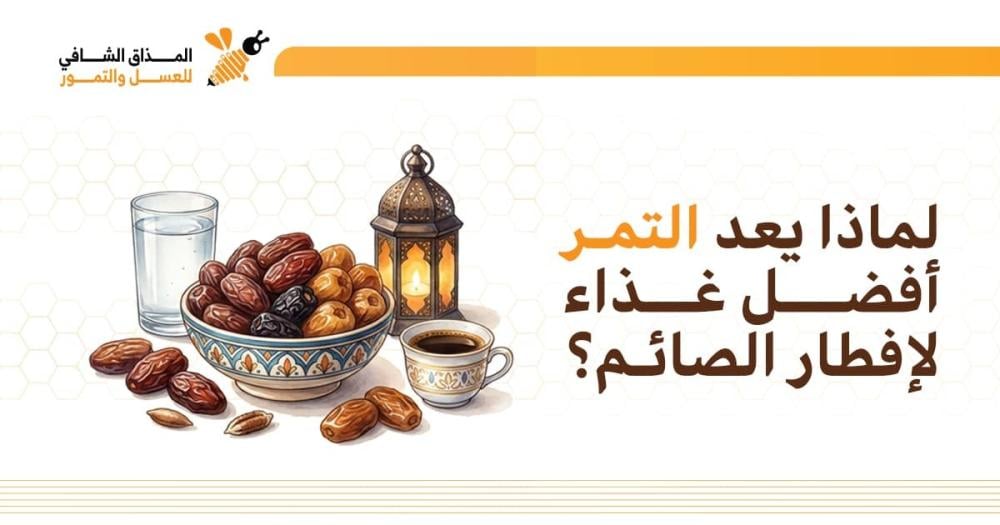

Dates are among the foods most associated with the month of Ramadan, to the extent that they have become a fundamental symbol for breaking the fast in various Islamic cultures. This association is not merely an inherited custom, but is based on integrated religious, health, and nutritional foundations. In this article, presented by Al-Mathaq Al-Shafi Store, we comprehensively review why dates are considered the best food for breaking the fast, addressing the various aspects that explain this importance.
Why it is Recommended for a Fasting Person to Break Their Fast with a Date
The recommendation to break the fast with dates goes back to the Sunnah of the Prophet, peace be upon him, where it was reported that the Prophet ﷺ used to break his fast with dates before praying, and if he did not find dates, then with water. This guidance carries deep connotations, as it combines simplicity and benefit. Dates are a natural, unprocessed food, easy to digest, and provide immediate energy to the body after long hours of fasting. Adhering to this Sunnah also strengthens the spiritual connection to rituals, making the moment of breaking the fast a complete experience that combines worship and health. The choice of dates is not random, but based on wisdom that aligns with the body's needs at that moment.
Why Do We Eat Dates at Iftar?
After a long day of abstaining from food and drink, the body's blood sugar level is low. Here comes the role of dates, as they contain natural sugars such as glucose and fructose, which are rapidly absorbed sugars that help raise energy levels immediately without exhausting the digestive system. In addition, dates contain a group of vitamins and minerals such as potassium and magnesium, which contribute to rebalancing the body and compensating for what it lost during fasting. The fiber in dates also helps prepare the stomach to gradually receive food.
Why Have Dates Become Better Than Others for Iftar?
When comparing dates with other foods, we find that they possess several characteristics that make them the best choice for breaking the fast. Firstly, they do not require cooking or preparation, making them a ready and easy-to-eat food. Secondly, their nutritional composition is balanced, combining sugars, fiber, and minerals. Dates also do not cause a shock to the digestive system, unlike some fatty or heavy foods that may lead to lethargy or stomach upset. Therefore, starting Iftar with dates gradually prepares the body to consume a full meal later.
Why Does Everyone Break Their Fast with Dates?
The widespread custom of breaking the fast with dates in various Islamic countries is due to a combination of religious, cultural, and health factors. The Prophet's Sunnah played a major role in establishing this custom, and the availability of dates in many Arab countries made them an economical and accessible option. In addition, inherited experiences have proven that dates help in feeling full and comfortable after breaking the fast, which has reinforced the continuity of this custom across generations. Over time, dates have become an integral part of Ramadan rituals; Iftar is not complete without them.
Are Dates Suitable for Iftar?
Scientifically, dates are considered one of the best foods to eat at Iftar. They achieve several goals at once: they compensate for energy deficiency, raise blood sugar levels moderately, and help activate the digestive system. Moreover, consuming them in moderate quantities (such as 1 to 3 dates) does not cause an excessive rise in sugar, but rather provides a balanced energy boost. This makes them suitable for most people, including those who seek to maintain a healthy diet. However, some groups, such as diabetics, should pay attention to the quantity consumed, and it is preferable to consult a doctor to determine the appropriate amount for them.
Health Benefits of Dates at Iftar
Dates are rich in antioxidants that help protect the body from inflammation. They also promote heart health due to their potassium content. Furthermore, they contribute to improving digestion and reducing constipation, which is common during Ramadan due to changes in eating patterns. Other benefits include helping to reduce excessive hunger, which prevents overeating during Iftar, and providing a sense of comfort and tranquility, thanks to their positive effect on the nervous system.
Dates Between Nutrition and Worship
The role of dates is not limited to being a beneficial food; it extends beyond that to become a symbol of balance between body and soul. Choosing them at Iftar reflects adherence to the Sunnah and health awareness at the same time. Their simplicity also reminds people of the value of moderation and urges them to avoid extravagance, especially in a month that is supposed to be a month of self-discipline.
Benefits of Dates for Fasting People
Dates are among the greatest foods recommended by Islam, and they have great benefits for fasting people, especially at Iftar. Dates provide the body with quick energy after long hours of fasting because they contain easily absorbed natural sugars. They also help raise blood sugar levels gradually, which alleviates feelings of fatigue and dizziness. They also contribute to preparing the stomach to receive food after fasting and contain important nutrients such as potassium, magnesium, and fiber that support body health.
What Did the Prophet Say About Dates on an Empty Stomach?
The Prophet ﷺ encouraged breaking the fast with dates, saying: "If one of you breaks his fast, let him break it with dates; if he does not find dates, then let him break it with water, for it is purifying." The Prophet ﷺ loved dates and consumed them frequently, and he mentioned their virtues in other hadiths, such as the virtue of Ajwa dates, which indicates their great status in prophetic nutrition and that they are a blessed food that combines physical benefit and spiritual blessing.
Why Did Allah Command Mary to Eat Dates?
In the story of Mary, peace be upon her, Allah commanded her at the moment of childbirth to shake the trunk of the palm tree so that fresh dates would fall upon her, saying: ﴿And shake towards you the trunk of the palm tree; it will drop upon you fresh, ripe dates.﴾ (Quran 19:25). There is great wisdom in this, as dates are a food rich in energy that helps strengthen the body after severe exhaustion and compensates the woman for the effort she lost during childbirth. It is also mercy and ease from Allah in the most difficult moments.
Conclusion
In conclusion, it is clear that dates are not just a Ramadan tradition, but a continuous choice throughout the year, combining health benefits and religious guidance. They provide the body with what it needs after fasting, without exhausting it, and help start Iftar in a balanced way. Therefore, continuing this habit is not only following the Sunnah but also an investment in body health and comfort. With moderation in consumption, dates remain the best start to the Iftar meal, combining simplicity and benefit at the same time. Thank you for visiting Al-Mathaq Al-Shafi Store.