
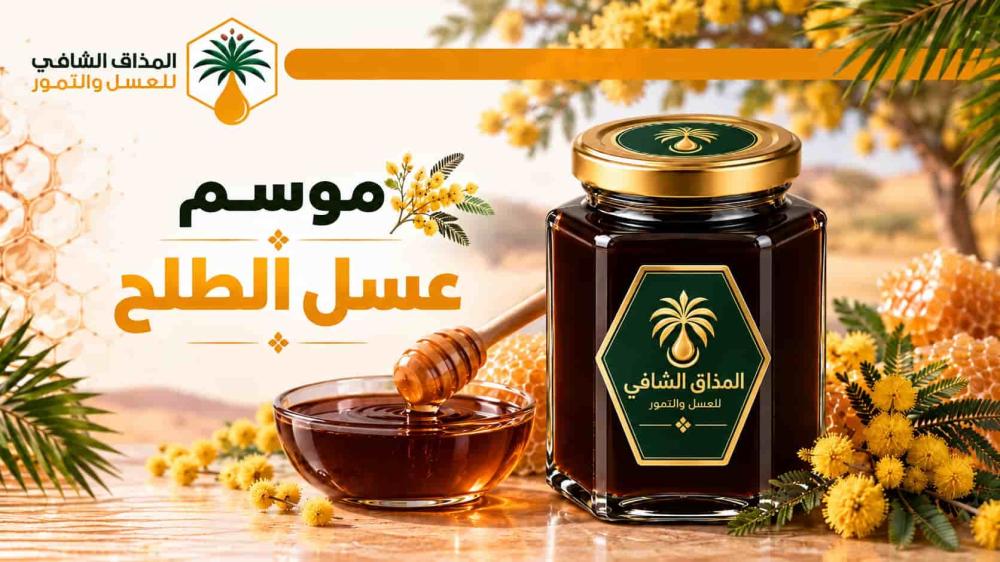

The Talh honey season is one of the seasons eagerly awaited by natural honey enthusiasts in Saudi Arabia. Its production is linked to the flowering of Talh trees and the availability of suitable conditions for bee activity and nectar collection. The start and end of the season vary depending on the region and climatic conditions, so understanding the season's timing and the stages of honey harvesting can help you determine the right time to buy fresh Talh honey.
What Is Talh Honey and What Are Its Benefits?
Talh honey is produced by bees from the nectar of Talh tree flowers. These trees grow in various regions of Saudi Arabia, and the honey is distinguished by its color, flavor, and aroma, which may vary depending on the tree species, their location, and the conditions in which they grow.
Talh honey contains natural sugars and plant compounds and is known for its distinctive flavor. Its main characteristics include:
- A source of energy: It contains natural sugars that provide the body with energy.
- A distinctive flavor: It has a taste and aroma that distinguish it from other types of honey, although its characteristics vary depending on the nectar source.
- Versatile uses: It can be added to warm drinks or yogurt, or eaten with various foods.
- Some medicinal benefits: Honey has antioxidant and antimicrobial properties. It may also help soothe coughs and relieve throat irritation associated with upper respiratory tract infections.
Learn more about: The Benefits of Talh Honey Before Bed
How Do Beekeepers Prepare for the Talh Honey Season?
Preparation for the Talh honey season begins before the flowers bloom. Beekeepers monitor the condition of the trees, the weather, and nectar sources, and prepare their hives to ensure that the bees can make the most of the flowering period.
The main preparation steps include:
- Monitoring trees and flowering times: Beekeepers monitor the appearance of flowers in areas where Talh trees grow to determine the right time to place hives near nectar sources.
- Inspecting beehives: They check that the hives are in good condition, the colonies are strong, and conditions are suitable for bee activity.
- Choosing a suitable location: Hives are placed near flowering areas, taking into account accessibility, the availability of water sources, and suitable environmental conditions.
- Preparing honey-harvesting equipment: The necessary tools are prepared for removing honeycombs, extracting honey, and packaging it in a way that preserves its quality.
Improving apiary management and caring for beehives are important aspects of supporting the beekeeping sector and enhancing the quality of its products. This is also emphasized in the apiary management guidelines issued by the Saudi Ministry of Environment, Water and Agriculture.
When Does the Talh Honey Season Begin in Saudi Arabia?
The Talh honey season in Saudi Arabia usually begins in early summer, particularly in June and July. The start and end dates vary depending on the region, the flowering time of Talh trees, and climatic conditions. In some areas, honey harvesting may continue into a later period.
The season continues throughout the flowering period, as long as nectar is available. Therefore, there is no single start or end date for the entire Kingdom. It is best to follow local seasons to find out when newly harvested Talh honey is produced and becomes available for sale.
When Does the Talh Honey Season End, and How Long Does It Last?
The Talh honey season in Saudi Arabia usually ends toward the end of summer, although it may extend into early autumn, including September or October in some areas. The timing varies depending on the region, the flowering period of Talh trees, and climatic conditions.
Does the Timing of the Talh Honey Season Vary by Region?
Yes, the timing of the Talh honey season varies across Saudi Arabia because of differences in Talh tree species, their flowering periods, and the surrounding climatic conditions. As a result, the season does not begin at the same time in every region, and the honey-harvesting period is not the same everywhere.
How the Talh Honey Season Varies from One Region to Another
Talh trees grow in several regions of the Kingdom, including Riyadh, Ha'il, Makkah, Asir, and Al-Baha. Environmental conditions, elevations, and temperatures vary across these regions, affecting tree growth and flowering times.
Consequently, beekeepers in some locations may begin harvesting honey earlier than others, while the season starts later elsewhere depending on when the flowers bloom and nectar becomes available. The duration of honey production also varies from one region to another.
How Does Rainfall Affect the Timing of the Talh Honey Season?
Rainfall affects the growth and condition of Talh trees. Suitable moisture levels help support plant growth and create favorable conditions for flowering, which may influence the amount of nectar available to bees.
However, rainfall does not necessarily mean a greater honey yield. The outcome depends on the timing, amount, and distribution of rainfall, as well as temperatures and weather conditions during the flowering period. These factors may cause the season to begin earlier or later than it did the previous year.
How Can You Find Out When the Talh Honey Season Begins in Your Area?
To determine the likely timing of the Talh honey season, it is best to monitor local signs rather than rely on the same month every year. The main indicators include:
- The beginning of Talh tree flowering: This indicates that the period when nectar becomes available to bees is approaching.
- Beekeeping activity in the area: This can help you identify when honey harvesting begins and when the new crop becomes available.
- Updates from apiaries and local markets: These can indicate when newly harvested Talh honey goes on sale, taking into account differences in production timing between regions.
Therefore, the best way to determine the Talh honey season is to combine observations of tree flowering, climatic conditions, and local production updates, as the actual timing changes depending on the region and the conditions of each year's season.
When Do Beekeepers Harvest Talh Honey?
Beekeepers harvest Talh honey when the bees have collected a sufficient amount of nectar and stored it in the honeycombs, and the honey has matured enough to be extracted. Therefore, the harvest date does not depend solely on when the trees begin to flower.
Beekeepers look for several indicators when determining the right time to harvest:
- Honey maturity in the combs: The beekeeper inspects the honeycombs to check whether the honey has fully matured. One common indicator is when bees have capped large portions of the cells with wax.
- Continued nectar availability: The beekeeper monitors bee activity and the availability of flowers to determine the appropriate harvesting time.
- Hive condition: Hives are inspected to ensure that honey can be collected while preserving the bees' needs and food reserves.
Harvesting times vary from one apiary to another, even within the same region, depending on colony strength, nectar availability, and when bee activity begins. Therefore, honey may be harvested in stages rather than extracted all at once.
How Do Beekeepers Extract Talh Honey from the Honeycombs?
Once the honey has been confirmed to be mature, beekeepers collect suitable honeycombs and move them to a designated extraction area. The wax layer covering the honey is then removed, and extraction equipment is used to separate the honey from the wax before the honey is filtered and packaged.
The Talh honey extraction process usually involves the following stages:
- Collecting the honeycombs: Combs containing mature honey are removed while taking care to protect the hives.
- Removing the wax cappings: The thin layer of wax covering the honey is removed to facilitate extraction.
- Extracting the honey: The combs are placed in a centrifugal extractor to separate the honey from the wax.
- Filtering: The honey is filtered to remove wax residue and larger impurities.
- Packaging and storage: The honey is packed in clean, food-safe containers and stored away from moisture and high temperatures.
Clean equipment and proper storage help preserve honey quality after extraction. Following appropriate harvesting and packaging practices also reduces the risk of contamination or changes to its properties.
How Can You Distinguish Authentic Talh Honey from Adulterated Honey?
You can assess the quality of Talh honey by looking at several characteristics, including its distinctive natural aroma, its balanced taste, which varies depending on the nectar source, and its consistency, which may change with temperature and storage conditions. Natural honey may also crystallize over time, but this does not mean it is adulterated. However, these characteristics alone cannot confirm authenticity. Therefore, buy Talh honey from a trusted source and check the product details. Laboratory testing is the most reliable way to detect added sugars or adulteration.
Enjoy the flavor of local Ha'il Talh honey and make it a special addition to your table with Mathaq Al Shafi. Order your jar now and enjoy a distinctive, wholesome experience.
Frequently Asked Questions About the Talh Honey Season
Is Talh honey available all year round?
Yes, Talh honey is available throughout the year if stores have it in stock. However, new production depends on the flowering season and nectar collection.
What Is the Best Time to Buy Fresh Talh Honey?
The best time is after harvesting and extraction begin in the producing region. Check the production date and the honey's source. The timing of the Talh honey season depends on the region and climatic conditions, so flowering and harvesting dates vary from one year to another.