
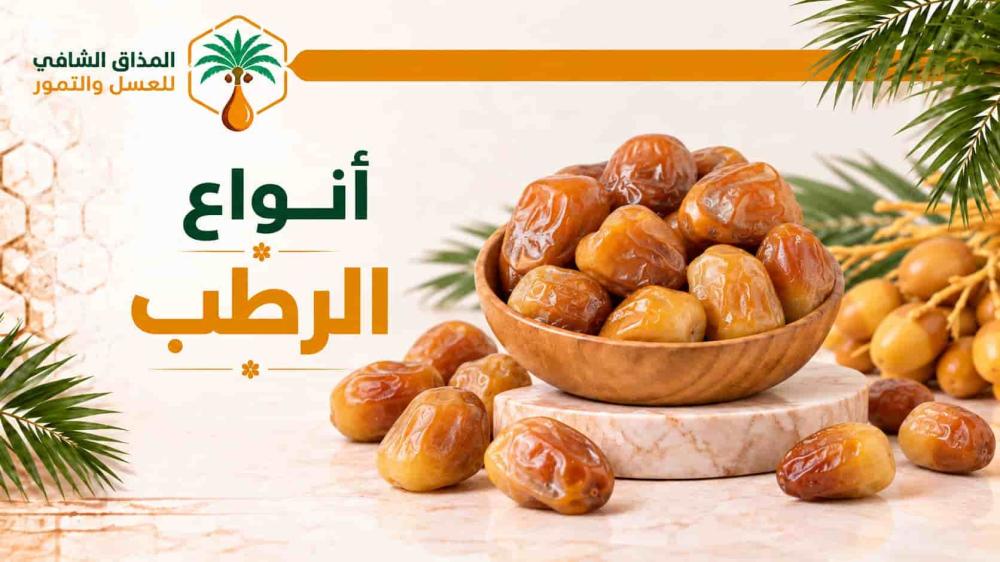

Rutab dates differ in color, size, texture, and sweetness. Some fruits are soft and juicy at the rutab stage, while other varieties are also eaten earlier, at the bisr or khalal stage, when they are firm. Agricultural regions such as Al-Ahsa, Medina, Qatif, and Al-Qassim are known for producing different varieties. In this article, we explore the most popular types of rutab, their differences, what each region is known for, and how to choose the right type for your taste.
Most Popular Types of Rutab
Varieties differ in texture and sweetness depending on their stage of ripeness. Here, we distinguish between soft Sukkari rutab that melts in the mouth and the firm yellow fruits of varieties such as Barhi and Rothana, which are eaten as firm dates or as they begin to turn into rutab. These are some of the most widely available varieties:
- Khalas Rutab: Khalas starts out yellow, then gradually turns amber or light brown as it ripens. It has a balanced sweetness and a soft texture that retains some firmness, and Al-Ahsa is known for its production.
- Barhi: Often served as round, crunchy yellow dates at the bisr or khalal stage, Barhi fruits become soft as they reach the rutab stage. When buying them, check the ripeness stage stated on the product, as firm yellow dates have a different texture from rutab.
- Al-Qassim Sukkari Rutab: A sweet, soft type of rutab associated with Al-Qassim, known for its delicate, melt-in-the-mouth texture. Here, the term refers to the fruit at the rutab stage, rather than firm yellow dates.
- Khunaizi Rutab: Dark red at the bisr stage, these dates become darker and softer as they ripen. Khunaizi is one of the early-season varieties in the Eastern Province, particularly Qatif and Al-Ahsa. It usually appears in late June and remains available through August, and suits those who enjoy dark rutab with a soft texture.
- Shishi and Ruziz Rutab: Shishi has moderate sweetness and a relatively firm texture, and it can be eaten at more than one stage of ripeness. Ruziz is a well-known variety in Al-Ahsa, distinguished by its medium size and balanced flavor. It is eaten at the rutab stage or after reaching the tamr stage.
- Rothana and Barni: Rothana is associated with Medina and is among the early-season varieties, with its season beginning in June and peaking in July and August. It is eaten while yellow and firm at the khalal stage, before one end begins to turn brown and soften. Barni is grown in several regions of Saudi Arabia, and its best-known names include "Medina Barni" and "AlUla Barni." Its texture and sweetness change as it ripens.
Types of Yellow Rutab
The term "yellow rutab" is used commercially for some firm yellow dates. However, crunchy fruit is usually at the bisr or khalal stage and is also referred to as yellow dates. The rutab stage begins when all or part of the fruit softens. This firm texture should therefore not be confused with the soft, melt-in-the-mouth texture of Al-Qassim Sukkari rutab.
Varieties eaten while yellow at the khalal stage include Barhi and Rothana. Khalas and Barni fruits may also be yellow before fully ripening. If you prefer a crunchy texture, choose fruit at the khalal stage. If you prefer a soft texture, choose rutab at the appropriate stage of ripeness, such as Al-Qassim Sukkari rutab.
Types of Rutab in Saudi Arabia by Region
The date palm varieties grown in Saudi Arabia differ from region to region. A variety's association with a particular region does not mean it is grown exclusively there, but some regions have become known for producing specific varieties.
Types of Rutab in Al-Ahsa
Al-Ahsa is known for Khalas, Ruziz, and Shishi, while varieties such as Khunaizi and Barhi are also grown there. Their availability and quantities vary from one farm to another and from season to season.
Types of Rutab in Medina
Rothana is one of the most prominent varieties associated with Medina and is among the early-season varieties, with a season running from June to August. Other varieties grown there include Barni (Medina Barni/AlUla Barni), Barhi, and Khalas. Ajwa and Safawi are also associated with Medina, but they are more widely known commercially after reaching the tamr stage.
Types of Rutab in Qatif
Well-known varieties in Qatif include Khunaizi, Khalas, Shishi, Majnaz, and Barhi. The names and pronunciations of some local varieties may differ between villages and growers, and their availability also varies from season to season.
Types of Rutab in Al-Qassim
Al-Qassim is particularly associated with Sukkari rutab, which appeals to those who enjoy pronounced sweetness and a soft texture at the rutab stage. Other date palm varieties are also grown in the region, so the available types of rutab can be compared by flavor and texture rather than by the region's name alone.
The rutab season usually begins in summer, but the timing of each variety depends on the region, temperatures, and palm care. Some varieties appear early, followed by others as the season progresses.
Best Types of Rutab and How to Choose the Right One
The best type of rutab is the one that suits your taste. Al-Qassim Sukkari rutab suits those who enjoy pronounced sweetness and a soft, melt-in-the-mouth texture, while Khalas suits those who prefer balanced sweetness and a soft texture that retains some firmness. If you prefer crunchy yellow dates, you can choose Barhi or Rothana at the khalal stage, before they turn into soft rutab.
When comparing types before buying, consider the following criteria:
- Texture: For a crunchy texture, choose Barhi or Rothana dates at the khalal stage. For soft, melt-in-the-mouth rutab, try Al-Qassim Sukkari. You can also try Khalas or Khunaizi if you would like other varieties with a soft texture.
- Sweetness: Sukkari rutab is known for its pronounced sweetness, while Khalas and Shishi offer a more balanced flavor. Sweetness also varies within the same variety depending on the stage of ripeness.
- Fruit Condition: Choose undamaged dates and avoid mold, a fermented smell, or excessive liquid leakage. The natural softness of rutab is not, in itself, a sign of spoilage.
- Use and Storage: Soft rutab is suitable for eating straight away, while firmer fruits hold up better during transport and serving. Keep rutab refrigerated in a suitable container. Excess quantities can be frozen, although their texture may change after thawing.
If you prefer soft Sukkari, you can explore Royal Sukkari Rutab from Mathaq Shafi. The term "Royal" refers to the product's commercial name, rather than a separate type of rutab. When trying a new variety, start with a modest quantity to find the texture and flavor that best suit your taste.
Conclusion
The most popular types of rutab include Khalas, Barhi, Al-Qassim Sukkari, Khunaizi, Shishi, Ruziz, Rothana, and Barni. These varieties differ in color, texture, sweetness, and stage of ripeness, and different Saudi regions are known for producing some of them. To choose the most suitable option, compare the fruits by flavor, freshness, softness, and intended use, rather than by the variety's name alone.