
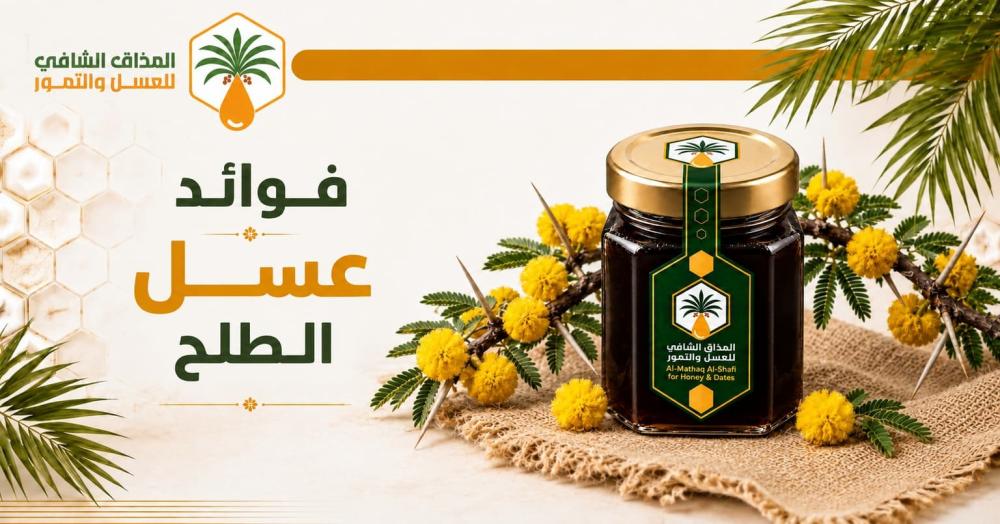

Talh honey has gained widespread attention for its rich flavor and versatile uses as part of a balanced diet. In this guide from Al Mathaq Al Shafi, we explore the benefits of Talh honey for the body and skin, how to use it in moderation, and who should exercise caution before consuming it.
What Is Talh Honey?
Talh honey is one of the most popular natural honey varieties, known for its dark color, thick consistency, and strong aromatic scent. It is extracted from the blossoms of thorny Talh trees belonging to the Acacia genus, which are highly capable of withstanding harsh desert and mountainous conditions.
Talh honey owes its widespread popularity to its high nutritional and therapeutic value. It contains a substantial concentration of bioactive compounds and antioxidants compared with lighter honey varieties. Its distinctive flavor combines mild sweetness with a subtle bitterness, making it a preferred choice among those who enjoy the authentic taste of local honey.
What Are the Benefits of Talh Honey?
Talh honey contains several bioactive compounds that give it various nutritional and therapeutic properties. Below are its most notable potential benefits in detail:
Supporting the Body with Natural Energy
Talh honey contains rapidly absorbed natural sugars, such as fructose and glucose, making it a quick and effective source of energy. Unlike refined sugar, it may produce a less pronounced rise in blood sugar depending on the amount consumed and the individual’s health. Many people prefer taking a spoonful of Talh honey in the morning or before exercising.
Antioxidants in Talh Honey
Talh honey contains natural antioxidants, including flavonoids and phenolic compounds, which contribute to protecting cells from oxidative stress and free-radical damage. Some studies also suggest that darker honey varieties may contain higher concentrations of antioxidants than lighter varieties, potentially enhancing the nutritional value of Talh honey.
Supporting the Immune System
Natural enzymes and antibacterial compounds are among the components found in honey. Consuming Talh honey in moderation as part of a balanced diet may support the body’s natural defenses. However, it should not be considered a substitute for medical treatment or relied upon to prevent or treat infections.
Supporting Digestive Health
Talh honey is commonly included in the diet because of its smooth texture and ease of use with foods and drinks. Some people prefer dissolving a small amount in a cup of warm water in the morning or adding it to other foods. Individual responses may vary, especially among people who experience digestive discomfort.
Benefits of Talh Honey for the Skin
Talh honey has natural moisturizing properties that may help soften the skin and improve its appearance when used appropriately. The antioxidants found in honey may also help protect the skin from oxidative stress. A patch test is recommended before applying honey to the skin, particularly for people with sensitive skin or allergies to bee products.
Supporting Wound Healing
Research has examined the use of medical-grade honey in wound and burn care because of its antimicrobial properties and its ability to maintain a moist healing environment. However, these findings do not mean that regular edible Talh honey should be applied directly to wounds or burns. Only sterilized medical-grade honey intended for wound care should be used under medical supervision.
Reducing the Appearance of Acne
Honey is sometimes used in skincare because of its moisturizing and antimicrobial properties. However, the evidence supporting the use of Talh honey specifically for treating acne remains limited. It should not replace dermatologist-recommended treatments, and use should be discontinued if redness, irritation, or an allergic reaction occurs.
Other Potential Benefits of Talh Honey
Honey is commonly used to soothe the throat and cough and can be included in an evening routine as a natural sweetener. It may also provide energy for adults and children over one year old when consumed in moderation. Other commonly discussed uses of Talh honey include:
- Providing a natural source of energy.
- Replacing refined sugar in some foods and drinks.
- Soothing the throat and cough.
- Supporting the skin’s moisture.
- Adding flavor to a balanced diet.
- Providing natural antioxidant compounds.
- Supporting an evening food routine.
Benefits of Wild and Local Talh Honey
The terms “wild Talh honey” and “Local Talh honey” are commonly used to describe honey collected from the nectar of Talh blossoms. However, these labels do not always guarantee identical composition or quality, as the characteristics of honey can vary according to its geographical origin, harvest season, processing method, and storage conditions.
Both varieties may share similar sensory and nutritional properties when they come from the same floral source. Therefore, it is important to examine the product’s origin, purity, storage, and quality information rather than relying only on its commercial name.
How to Use Talh Honey
A moderate amount of Talh honey can be consumed in the morning or dissolved in a cup of warm water. It can also be added to yogurt, oatmeal, and beverages as a natural alternative to refined sugar.
To choose a product that retains the natural characteristics of Talh honey, it is important to verify its quality, purity, and source. One available option is Local Talh Honey from Al Mathaq Al Shafi, produced from the nectar of Talh blossoms in the Hail region. It is distinguished by its dark brown color, thick consistency, and flavor that combines moderate sweetness with a subtle bitterness. It can be consumed directly or added to various foods and drinks.
Is Talh Honey Suitable for Everyone?
Most healthy adults and children over one year old can consume Talh honey in moderation as part of a balanced diet. However, because honey contains natural sugars, people with diabetes or those who need to control their carbohydrate intake should consult their doctor or dietitian to determine a suitable amount. Honey should not be viewed as a treatment for regulating blood sugar.
How Much Talh Honey Can Be Consumed Daily?
A healthy adult may consume a small or moderate amount of Talh honey while accounting for it within their total daily intake of added sugars and calories. The appropriate amount varies according to diet, activity level, and health condition. People with diabetes should consult a healthcare professional before consuming it regularly.
Nutritional Value of Talh Honey
Talh honey primarily contains natural carbohydrates and sugars, along with small and varying amounts of minerals, enzymes, and antioxidant compounds. Its precise nutritional composition may differ according to its floral source, production region, harvest season, and processing method.
A tablespoon of honey weighing approximately 21 grams generally provides around 60–64 calories and about 17 grams of sugars. It should therefore be consumed in moderation, particularly by people managing their weight, blood sugar, or total calorie intake.
Potential Side Effects and Precautions of Talh Honey
Excessive consumption of Talh honey may lead to certain adverse effects, including:
- Triggering an allergic reaction in people sensitive to honey, pollen, or other bee products.
- Raising blood sugar levels when consumed in large quantities.
- Increasing daily calorie and sugar intake when consumed excessively.
- Honey must not be given to children under 12 months because of the risk of infant botulism.
Additional Information About Talh Honey
Talh honey is known for its dark color, thick consistency, and distinctive aroma. The product featured in this article is sourced from apiaries in the Hail region of Saudi Arabia and is characterized by its natural color, texture, and flavor.
To maintain its quality for as long as possible, store Talh honey in a dry place at a moderate temperature, away from direct sunlight and moisture. Keep the container tightly closed and use a clean, dry spoon to prevent water or food residue from entering the jar.