
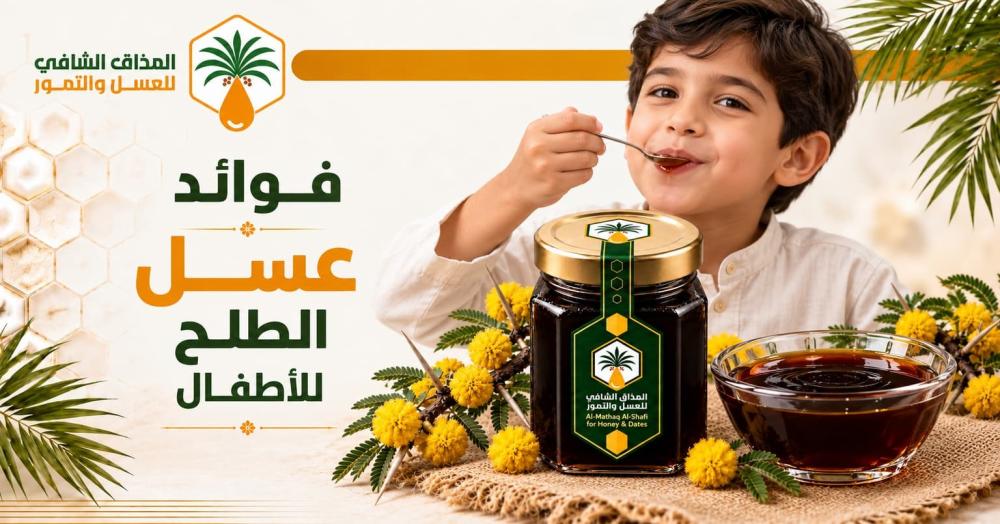

As children grow, many parents look for natural options that can add value to their diet. Talh honey is one such option because of its distinctive taste and potential nutritional benefits. However, giving it to children depends on the child’s age and how it is consumed. So, when can it be introduced into a child’s diet, and what are the most notable benefits of Talh honey for children?
Benefits of Talh Honey for Children
Children need energy throughout the day to move, learn, and play, as well as a varied diet that provides the nutrients required to support their growth. Talh honey can therefore be an excellent addition to certain meals after the age of one, particularly as an alternative to added white sugar. Its potential benefits relate to several aspects of a child’s daily nutritional and health needs, including the following:
Soothing Coughs
A nighttime cough can disrupt a child’s sleep and make them feel more uncomfortable during the night. This is where one of the most important benefits of Talh honey before bedtime may be helpful for children over one year old. A scientific review published by Cochrane indicated that honey may help reduce cough severity and improve sleep in children older than one year.
The review included six trials involving 899 children and found that honey may help reduce the frequency and severity of coughing and improve cough-related sleep compared with no treatment or a placebo.
If your child is over one year old and has a cough, try Talh honey from Mathaq Shafi and benefit from the properties of honey that may help soothe coughing.
A Natural Source of Energy
Talh honey contains glucose and fructose, two sugars that the body can use for energy. It can therefore be a suitable addition to a child’s meal, but it should not be considered a primary source of nutrition because it remains a sugar-rich food.
Contains Antioxidant Compounds
During growth, a child’s body needs a varied diet that provides nutrients and compounds that help maintain healthy cells. Talh honey contains phenols and flavonoids, which are plant compounds with antioxidant activity that help the body counter certain molecules that may affect cells. Talh honey can therefore form a small part of a varied diet for children over one year old, alongside fruits, vegetables, and other foods rich in these compounds. Local Talh honey from Mathaq Shafi can also add a natural and pleasant taste to a child’s daily meals.
Benefits of Talh Honey on an Empty Stomach for Children
Parents often look for natural additions that their children enjoy and that can be easily incorporated into their daily meals. Talh honey offers a rich taste and can be served in several simple ways, whether as a small amount on its own or mixed with yogurt, oatmeal, and other suitable foods.
The most notable benefits of Talh honey for children include:
- Helping provide the child with daily energy: Talh honey contains sugars that the body can use as a quick source of energy, making it a suitable addition to a child’s meal before a day of play and physical activity.
- Adding beneficial compounds to the diet: Talh honey contains phenols and flavonoids with antioxidant activity, making it a natural addition alongside other sources of these compounds, such as fruits and vegetables.
- Helping relieve a child’s troublesome cough: Scientific reviews suggest that honey may help children over one year old experience less severe acute coughing associated with colds, potentially making the period of illness more comfortable for the child and family.
As for consuming Talh honey specifically on an empty stomach, there is no strong evidence that doing so provides additional benefits. It may be served in the morning or with food. What matters most is that the child is over one year old and receives a moderate amount as part of a varied diet.
At What Age Can Children Have Talh Honey?
The CDC recommends not giving honey to children younger than 12 months because it may contain spores of Clostridium botulinum bacteria, which can cause infant botulism.
After a child reaches one year of age, Talh honey may be offered in small amounts as part of a balanced diet. However, it is important to remember that honey is a source of free sugars and is not a substitute for regular meals.
How to Serve Talh Honey to Children
After confirming that the child is over one year old, Talh honey can be served in simple ways with foods the child already enjoys, instead of offering large quantities or using it repeatedly as a sweet treat throughout the day. Some suitable ways to serve Talh honey to children include:
- With yogurt: Add a small amount to plain yogurt for a naturally sweet taste.
- With oatmeal: Use a little honey to sweeten oatmeal instead of sugar.
- With bread: Spread a very thin layer on a piece of bread suitable for the child’s age.
- With other foods: Use it as a natural sweetener in certain meals and drinks that are appropriate for the child.
It is preferable not to add honey to extremely hot drinks—not because doing so makes it dangerous for the child, but to preserve its natural and sensory qualities as much as possible. The amount served remains more important than the method of serving, as the World Health Organization classifies the sugars in honey as free sugars that should be limited.
Precautions When Giving Talh Honey to Children
Although Talh honey can be introduced into a child’s diet after the age of one, several points should be considered to ensure that it is used appropriately. These include:
- Children under 12 months: Honey must not be given to infants before their first birthday because of the risk of infant botulism, according to the CDC.
- Excessive consumption: Honey is a source of free sugars, so it should not be served in large quantities or several times throughout the day.
- Dental health: Frequent sugar consumption may increase the risk of tooth decay. The World Health Organization recommends limiting free sugars to help protect children’s dental health.
- Allergies: If the child develops signs of an allergic reaction after consuming honey, such as a rash, facial swelling, or difficulty breathing, stop giving it and seek medical care if severe symptoms occur.
- Persistent coughing: Honey may help relieve acute coughing in children over one year old, but it is not a substitute for medical advice if the cough is severe, persistent, or accompanied by concerning symptoms.
Because product quality is as important as the way it is used, choose a trusted source that provides natural honey of clearly stated quality when purchasing Talh honey. You can order honey products, including Talh honey, from Mathaq Shafi.
Frequently Asked Questions About the Benefits of Talh Honey for Children
At What Age Can a Child Have Talh Honey?
A child can have Talh honey after reaching 12 months of age. It must not be given before then because of the risk of infant botulism.
How Much Talh Honey Is Suitable for a Child?
There is no standard medical serving of Talh honey based on a child’s age. It is therefore best to offer a small amount and include it within the child’s total daily intake of sugars.
Can Children Have Talh Honey Every Day?
Talh honey can be included in a child’s diet after the age of one, but it does not need to be consumed every day. It is preferable to provide a variety of foods and limit sugars to support a balanced diet and maintain dental health.